


Five years of maternal mortality data in Minnesota shows 95% of maternal deaths occurring in the state were preventable.
The Minnesota Department of Health released its report on Jan. 12, examining deaths between 2017 and 2021.
This represents 162 people who died while pregnant or within one year of pregnancy during this time frame.
Based on the data from the Maternal Mortality Review Committee, the state’s 2021 pregnancy-related mortality ratio was about 34 deaths per 100,000 live births. This is slightly above the national average.
Most maternal deaths occurred after childbirth, a trend consistent with national findings. The top five leading causes of death were mental health conditions including substance use disorders, injury, infection, loss of blood, and diseases of the heart muscle.
“In Minnesota, having a baby is much more life threatening for American Indian and Black parents,” a news release stated.
The maternal death rate was over 12 times higher than the state rate among American Indians. And it was more than two times higher for Black parents.
“These findings are deeply troubling and underscore the urgent need for action to ensure every family receives the supports and services required for a safe and healthy pregnancy," stated Minnesota Commissioner of Health Dr. Brooke Cunningham in the news release.
"Addressing the racial disparities outlined in this report will require the collaboration of multisector partners, community organizations and state leaders.”
The report calls for officials to address a lack of access to care, disconnected care and a lack of follow-up. The report also concludes there is a need for additional emotional, physical and mental health supports, before and after pregnancy.
-
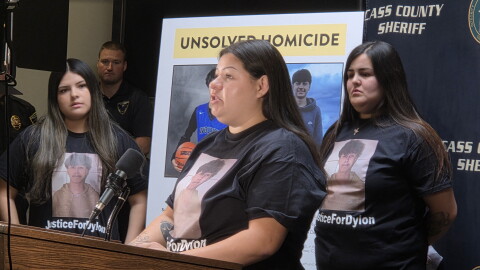 Larissa Donovan/KAXEThe family of Dylon Oothoudt, the Leech Lake Band of Ojibwe and the Cass County Sheriff's Office hosted a press conference Oct. 7, 2026, as the homicide investigation continues.
 -
 Matt C/UnsplashThe rechargeable batteries are used in nearly every home and are generally safe but can be dangerous.
 -
 Maria Hileman/KAXEThe Grand Rapids Police Department is investigating a prank call about a fabricated shooting at Old Central School on Oct. 6, 2026.
 -
 Canva ProThe highway had been closed since May for construction.
 -
 Contributed/Anna Paige for MinnPostState Sen. (and meteorologist) Rob Kupec and GOP challenger Austin Peterson are squaring off in the race to represent the Moorhead area in St. Paul.
 -
 Plus: Highway 71 has reopened between Turtle River and Tenstrike; and lithium-ion battery safety highlighted during Fire Prevention Week.
 -
 ContributedRepublican-aligned groups are spending heavily on Andrea Zupancich's campaign for the state Senate District 3 seat.
 -
 Contributed/NOAA Great Lakes Environmental Research LaboratoryThe invasive mussels were attached to boats from Sauer Lake and Eleventh Crow Wing Lake.
 -
 Larissa Donovan/KAXELaw enforcement personnel warn of a known scam circulating the area, where scammers impersonate deputies to solicit payments for fictitious warrants.
 -
 Contributed/Robin Opsahl | Iowa Capital DispatchThe Republican-controlled Iowa Legislature met in special session to nearly double the state's allowable tax incentives as Mesabi Metallics plans a steel mill there.


