


BLACKDUCK — About a dozen residents packed into Blackduck’s small City Council chambers for the first of two public hearings Monday, Sept. 22, aimed at amending the city’s cannabis ordinance.
People there expressed concerns about the changes a cannabis business could bring to the small northern community of about 850 residents. In August, the Council heard a proposal for a cannabis cultivating facility coming to Blackduck, but the site — the former Anderson Fabrics manufacturing plant — is near an early childhood center.
Those behind the proposal say it could bring around 150 jobs to the community after about 100 were lost to layoffs when the Shade Store shut down its manufacturing operations earlier this year.
The Council took action to begin the ordinance amendment process on Sept. 8, proposing to eliminate buffers near schools and day cares for cannabis cultivators and manufacturers, while maintaining them for retail cannabis businesses.
“The fathers of this town, I mean, they're spinning in their graves for even considering something like this,” Jeff Beighley said during the hearing. “Why would you want to bring that into here in the first place?”

During the hearing, residents also raised concerns about marijuana businesses being too close to children, and some doubted how many of the 150 proposed jobs could be filled locally.
“Has anyone looked at where we’ve seen if there’s actually 150 people looking for a job in this area?” asked Erica Naughton, who shared she previously worked as a recruiter for the Shade Store. “We have a business in town; we struggle getting people from Bemidji to [work in] Blackduck.”
Alan Bonsett with NoBo presented to the Blackduck City Council on Aug. 18, describing his proposal to transform the former Shade Store manufacturing facility. Bonsett pointed to past successes in Michigan, creating jobs and getting large commercial properties back on local government tax rolls.


NoBo is interested in cultivating and manufacturing cannabis at 348 Summit Ave. W., in Blackduck’s industrial zone, which is allowed under the city’s existing ordinance. As of Tuesday, public records still listed the 45,000-square-foot facility, with an estimated $173,000 market value, as owned by Anderson Fabrics.
The site is next door to Blackduck Head Start, an early childhood center, which originally served employees of the plant. Cannabis ordinances for both Blackduck and Beltrami County establish buffers of 200 feet around schools and 500 feet around day cares. The county’s ordinance allows for buffers to be reduced by a vote of a township or city.
During the 15 minutes of public comment, City Administrator Christina Regas described how the city has worked with local Head Start leadership about the proposed business.
"BI-CAP [Bi-County Community Action Programs] has been included in this discussion, and their members and their board of directors have no problem with that business going into that location, as long as it does not include retail,” Regas said.

All local governments in Minnesota were required to adopt a cannabis ordinance following the legalization of adult-use cannabis in 2023. While the state’s cannabis regulatory agency has been slow to issue licenses due to lawsuits and delayed lotteries, most cities and counties met the January deadline to create ordinances, making room for the newly legalized industry. Blackduck’s cannabis ordinance delegates the licensing and enforcement responsibilities to Beltrami County.
The state law — while not giving leeway to prohibit cannabis — gave local governments room to shape where these businesses can operate, establish hours of operation and even cap the number of cannabis retailers within a county. Cannabis operations on tribal lands cannot apply to county caps.
Some cities, like Silver Bay in Lake County, passed ordinances declining to register or license any cannabis business, prompting lawsuits on the legality of those ordinances.
Blackduck will host its second reading and public hearing amending its cannabis ordinance at 6 p.m. on Oct. 6, with the final reading to take place during the regular council meeting following the hearing.
Editor's Note: This story was updated to reflect the hearing on Oct. 6 will be the public's final opportunity to comment, due to the third and final reading taking place during the regular Blackduck Council meeting immediately following the hearing.
KAXE regrets the error.
-
 Larissa Donovan/KAXEA public open house will be announced before the new Beltrami County Adult Corrections Center opens in May 2027.
 -
 Complaint accuses Cass sheriff of sharing nude images; Nevis man sentenced for social services fraudFind more stories from KAXE News at kaxe.org/local-news.
 -
 Screenshot/Minnesota Department of Natural ResourcesThe agency announced its decision to require supplemental environmental review Oct. 8, 2026, for the copper-nickel project planned between Babbitt and Hoyt Lakes.
 -
 Contributed/Sora Shimazaki via PexelsVincent Bellomo, 76, was sentenced in September 2026. He originally faced six felonies after investigators found he had large sums in his savings accounts while he was applying for benefits.
 -
 Megan Buffington/KAXEDeputy Aaron Ammerman, who is running for Cass County sheriff, filed the complaint against Sheriff Bryan Welk in January. An investigation was closed with no apparent action.
 -
 Contributed/Trina Swanson for CongressWhile Democrats running for the U.S. House have an advantage this year, Stauber has positioned himself well in the Iron Range district.
 -
Plus: MPCA’s draft Minntac permit at issue at information session.
-
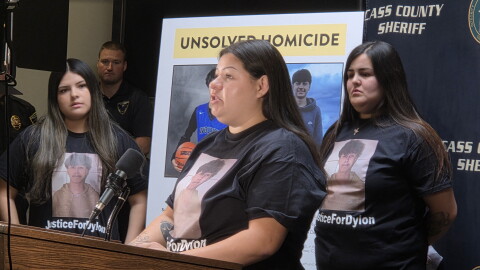 Larissa Donovan/KAXEThe family of Dylon Oothoudt, the Leech Lake Band of Ojibwe and the Cass County Sheriff's Office hosted a press conference Oct. 7, 2026, as the homicide investigation continues.
 -
 Matt C/UnsplashThe rechargeable batteries are used in nearly every home and are generally safe but can be dangerous.
 -
 Maria Hileman/KAXEThe Grand Rapids Police Department is investigating a prank call about a fabricated shooting at Old Central School on Oct. 6, 2026.


