


Every election season comes with its own kind of emotional baggage.
Anticipation, anxiety, hope, dread — they swirl together in ways that can make even the most grounded people feel unsteady. And because elections are collective experiences, those emotions don’t stay contained. They spill into our conversations, our group chats, our workplaces, and our families.
We talk about the candidates, the stakes, the issues, the awful ads and the flood of mailers. What we talk about less is how to prepare our relationships for what happens when the results arrive.
But we should.
If someone you care about is happy with the results and you aren’t, a simple “Congratulations” doesn’t require you to join the celebration. It’s not an endorsement. It’s an acknowledgment of their experience.
Because in many relationships — be that friends, siblings, partners, colleagues — one person is likely to be relieved or happy about the outcome, and the other may be disappointed, frustrated, or fearful. Pretending that dynamic won’t matter is how we end up with hurt feelings, avoidable conflict, or silence that lasts longer than it should.
The good news is that we can plan ahead. Just like campaigns prepare for Election Day, we can prepare for the emotional aftermath. And doing that work before the results come in — when everything is calmer and less reactive — can set a baseline of care that makes the harder moments easier to navigate.
Start with a simple question: “What do you think you’ll need from me after the results come in?” It’s disarming in the best way. It signals that you’re thinking about the relationship, not the scoreboard. It also gives the other person a chance to articulate their needs without the pressure of the moment.
Some people will say they want space. Others want distraction. Some will want to talk immediately; others won’t be ready for hours or days. You don’t have to agree with their political views to honor their emotional needs. You just have to decide that the relationship matters more than the election.

It also helps to share what you will need. Not in a dramatic way, but in an honest one: “If the results don’t go the way I hope, I might need a little time before I’m ready to talk.” Or, “If my candidate wins, I’ll be relieved, but I won’t expect you to celebrate with me.” Naming your own expectations makes it easier for the other person to respect them.
And then there’s the question of what to say when the moment arrives. This is where solidarity — not unity, not agreement, but solidarity — becomes a practical tool.
If someone you care about is happy with the results and you aren’t, a simple “Congratulations” doesn’t require you to join the celebration. It’s not an endorsement. It’s an acknowledgment of their experience. On the flip side, if someone you care about is upset or overwhelmed, saying, “If you aren’t ready to talk while you process the results, I understand — but I am here for you” can be a lifeline.
These small gestures don’t solve polarization, but they soften its edges. They remind us that relationships don’t have to rise and fall with political outcomes.
Prepping your relationships for Election Night isn’t about pretending politics don’t matter. They do. They shape our communities, our policies, and our futures. But relationships matter too — often more, and certainly longer. And in a season that rewards division, taking time to plan for connection is a quiet act of solidarity.
Campaigns prepare for Election Day because they know the stakes. We can prepare for Election Night because we know the stakes in our own lives. A little planning, a little curiosity, and a little solidarity can make the difference between a relationship strained by politics and a relationship strengthened by care.
If we want a civic culture that isn’t defined by winners and losers, this is one place to start: not with unity, but with the intentional, human work of showing up for each other when the results come in, and the next chapter of civic life plays out.
KAXE is partnering with Majority in the Middle for election coverage, civic engagement and outreach. Majority in the Middle is a Minnesota nonprofit described as an objective, outside force for systemic change to improve transparency, participation and civility within political and civic life.
Listen to Executive Director Shannon Watson's essay above.
Find more information on November 2026 elections from the KAXE news team here.
-
 Contributed/Hayley MadlandCharlie Mitchell listens to Sandhill Cranes, ponders Bald Eagle courtship, and learns about cold hardiness in plants.Send us a voice memo through SpeakPipe!
 -
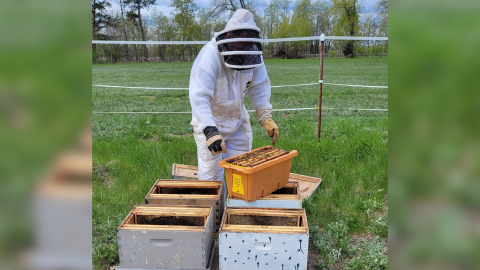 Contributed/Bee'n Happy FarmsBee’n Happy Farms is among the awardees of a Minnesota Department of Agriculture grant that helps beginner farming businesses grow.
 -
 Plus: Brainerd Schools working on bullying action plan after independent review; and Google ditches tax abatement in Hermantown.
 -
 Contributed/City of HermantownThe proposed data center in Hermantown would pay over $240 million over the next 20 years. The City Council will consider some project agreements on Oct. 26, 2026.


