



Aurora Waasakone Community of Learners in Bemidji
North Star Elementary School in Virginia
“This is Teegan, Evelyn, Charles, Ben, Kaia, Zoe, Brooke, and Izik with a report from North Star Elementary on Thursday, April 23, 2026.
“This is Teegan. Taimi said that last week, a bear opened her garbage can and pulled all the garbage out and dragged it to the top of the hill. It made a big mess she had to clean up. Time to keep the garbage in the garage again!
“We noticed that needles are just starting to burst out on one of the tamarack trees in the schoolyard. The aspens, red maples and silver maples are flowering.
“This is Evelyn. I noticed that Silver Lake is ice free this week. I also noticed the first mosquito of the season on Tuesday, April 21.
“This is Charles. I heard a bee buzz past me when I was reading in my hammock yesterday.
“This is Ben. I heard some Wild Turkeys when I was at my grandma’s house yesterday.
“This is Kaia. Two days ago, I noticed the first black fly of the season flying outside.
“This is Zoe. Here are the birds my mom, sister, and I have seen and/or heard on and/or near Silver and Bailey’s Lakes in Virginia this week: a Common Loon, Northern Shoveler, Common Goldeneye, Mallards, Trumpeter Swans, Bald Eagle, Chipping Sparrow, Red-winged Blackbird, Red-breasted Nuthatch, robin, a Northern Flicker, and bunch of Dark-eyed Juncos.
“This is Brooke. I saw a snapping turtle and a muskrat in Bailey’s Lake and my dad had a mourning cloak butterfly land on his finger yesterday.
“This is Izik. My dad and I saw a Golden eagle on the east end of Grand Rapids last Monday. It’s hard to tell a Golden Eagle from a juvenile Bald Eagle, but we noticed that this one had a gold-colored head and neck, so we were pretty sure it was a golden!
“This has been a report from North Star Elementary. Keep exploring the great outdoors!”
East Rapids Elementary in Grand Rapids
North Shore Community School near Duluth
“Hello from North Shore Community School on the north shore of Lake Superior. This is the Phenology Report for the week of April 18, 2026. My name is Caleb, and I am your phenologist for this week!
“On Thursday, April 23, Duluth had a significant amount of rainfall. There was between ½ of an inch to over 1 ½ inches of rain. Some areas had 2 inches of rain throughout late Thursday night into Friday.
“On Friday, April 17, Ms. Boyum’s class saw a few marsh marigold leaves popping up in the school forest. Ms. Jackson’s class last sap collection on Monday, April 20, was 12 cups for their four trees. On Thursday, April 23, Hunter found the first blooming dandelion outside the cafeteria window at school.
“On Monday, April 20, Ms. Edbloom saw a lot of birds at her suet feeders including Yellow-rumped Warblers, Common Grackles, Dark-eyed Juncos, White-throated Sparrows, Evening Grosbeaks and Yellow-bellied Sapsuckers. On Tuesday, April 21, Ilo saw his first cardinal at his house. On Wednesday, April 22, Ms. Urban saw her first Eastern Phoebe of the year. On Thursday, April 23, the Sandhill Cranes were very loud and noisy on the field north of the school. Sightings of flickers and grouse drumming have been reported frequently during the past week.
“Monday, April 20, around 4:00 pm, Mrs. Rolfe drove into her driveway and was shocked to see a lynx in her yard. It slowly walked away back into the woods as she drove in.
On Thursday, April 16, Ms. Rolfe’s class saw a mourning cloak butterfly. Mourning cloaks are one of the first migratory butterflies that come back in the spring.
“On Monday, April 20, Ian saw the first mosquito of the year on his arm while working on his dirt bike. On Thursday, April 23, Iris and Sigrid saw a water strider, the first of the year!
“On Friday, April 17, Ms. Emily noticed the steelhead were running. On Wednesday, April 22, the Preschoolers were patting some moss on a stump and saw some spores release into the wind.
“This concludes the phenology report. Have a great week and be observant!”
Long Lake Conservation Center near Palisade
This report is brought to you by Lola, Latrice and the students from Sand Creek Elementary in Coon Rapids.
“The weather was sunny and stormy for us with a high temperature of 81 degrees Fahrenheit and a low of 36. It is still very brown around Long Lake and there is still one small dirty pile of snow in the shade in the parking lot. The rain should help with both of those things.
“In the bog we saw that the marsh marigold buds are above the water, but no blooms yet. We were also able to see a tiny bit of the bright green of the new tamarack needle bundles.
“In the forest, the wild strawberry leaves are green. The fiddleheads are up a tiny bit. We had to move away the fallen leaves to see them. Garter snakes, white-tailed deer, chipmunks and squirrels were in the woods as well.
“On and in the lake we saw: two Trumpeter Swans, two loons, one otter, one beaver and one muskrat. In the air we heard the nearly constant chickadee ‘cheeseburger’ song and many frogs calling.
“It is a great time to take the time to notice nature and we want to remind you to unplug, get outside and LIVE CONNECTED!”
Little Falls Middle School
“This is Madelyn and Rowen reporting from Little Falls Middle School. This is our phenology report for the week of April 26.
“We had our first dragonfly sighting on April 16. It was believed to be a green darner.
“The Yellow-rumped Warblers have arrived. The first was spotted on April 16, and the next day they seemed to be everywhere.
“White-throated Sparrows have been seen and heard with their ‘Grand old Canada, Canada, Canada’ call.
“The first hepatica flowers are blooming in the woods, and the leaves of trout lily can be found, but no blooms yet.
“There are also the leaves of leeks, or ramps, in the woods, but they are still very small right now.
“The black bears are definitely out and roaming around in search of food.
“Mr. Kaddatz observed a cottontail rabbit pulling fur off of its side, and we are guessing it is part of its nest building process.
“A classmate was able to photograph our first Hermit Thrush, Brown Thrasher, and first ever Orange-crowned Warbler.
“We are currently up to 95 on our school year bird species count. We should easily go over our goal of 100 with all the new migrants coming through.
“On April 20, we saw a spike whitetail deer on a trail cam that was still carrying its antlers.
“All of a sudden, the juncos appear to be gone. We went from seeing them everywhere, to not seeing any, all in a 24-hour span.
“There was a bright metallic green ground beetle along with a zebra jumping spider that were spotted this week.
“On April 22, we also had a report of an American Bittern calling from a swamp, with its glug sounding call.
“That is our report for this week, until next week, keep exploring, keep discovering, and keep connecting with the great outdoors.”
Linwood Elementary School in Wyoming, Minnesota
"Greetings from the fourth-grade phenology team in the Linwood School Forest. This is Rylee, Hayden and Liliana reporting on our observations from the week ending April 24.
“This week we observed that our boxelder trees have fully flowered out, with long skinny green and pink tentacles. We think it looks like the tentacles of a jellyfish. They are also squishy if we squeeze them.
“Mr. Stephen reported seeing four seperate tom turkeys presenting their feathers this week. We also have reports of ticks and dragonflies in the forest.
“In the forest we saw that our pagoda dogwood has started blooming. The leaves are mostly green with light red around the edges, making it look like fire.
“That is all from the Linwood School Forest, and remember: There’s no place like Linwood!”
Rockford Middle School

“Hello, this is Everleigh, Emma, Ezra, Keira, Caleb and Barrett from Ms. K’s sixth grade class at Rockford Middle School. We are reporting on the week of Monday, April 20.
“Our temperatures had highs in the 80’s and lows in the 30’s. We’ve had some beautiful sunny days that remind us of what is yet to come this summer.
“John Latimer came out to visit us early in the week. We took a walk in our school forest looking for signs of spring. Many of us heard Red-winged blackbirds singing. They were flying back and forth from the woods to the wetlands. There were also sightings of robins, chickadees, grackles, Mallards, a lone cardinal, and a Wood Duck. It was a melodious afternoon.
“A dragonfly, water bug, and painted turtle were spotted in the wetlands. Someone saw a really plump squirrel and thought it was an owl.
“Many trees and bushes were starting to enter bud break and leaf out. The forest was sprinkled with various shades of green. It’s a sign of new beginnings for nature. Barrett heard some shuffling on the forest floor and spotted a garter snake. Boxelder bugs and ladybugs have also been spotted. John Latimer pointed out some Tartarian honeysuckle outside our forest.
“We’ve had several sightings of Bald Eagles. We think the nest in Medina has eaglets in the nest. Ian and Hank have seen some large carp in Lake Sarah. Dandelions are popping up all over; They’re little patches of happiness. Mckenzie spotted a little honey bee collecting pollen from the dandelions just outside our classroom window.
“Thank you for coming to visit us in Rockford, John. We will be back with more phenology findings in May! Bye!”
What have you seen out there? Let us know: email us at comments@kaxe.org or text us at 218-326-1234.
For more phenology, subscribe to our Season Watch Newsletter and podcast or visit the Season Watch Facebook page.
Funding for this project was provided by the Minnesota Environment and Natural Resources Trust Fund as recommended by the Legislative-Citizen Commission on Minnesota Resources (LCCMR).
-
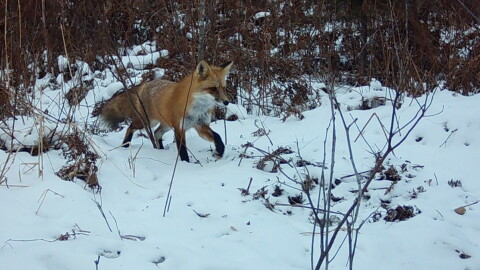 Grace Malinowski, program coordinator, discusses the Offal Wildlife Watching Project. The Community Science series is produced by Mark Jacobs.
 -
 The disease, which causes internal bleeding and sudden death, was confirmed Sept. 9, 2026. It does not affect humans.
 -
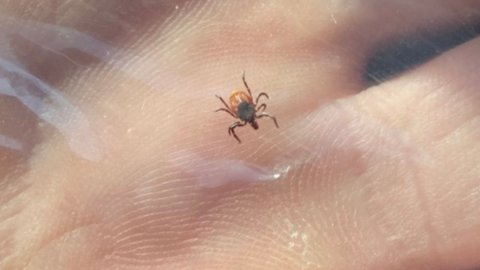 ContributedDozens of ticks as part of a study with the Marshfield Clinic Research Institute were submitted from the Bemidji area.
 -
 Christopher Smith, conservation committee chair for the Minnesota Herpetological Society, discusses how salamanders use dead and dying trees. The series is produced by Mark Jacobs.
 -
 Lorie Shaull/KAXEThe Minnesota Pollution Control Agency is surveying people's fish-eating habits to help limit contaminants in water bodies and make fish safer to eat.
 -
 Contributed/Daniel DewaldCisco and other cold water fish died by the thousands in the large, shallow lake as water temperatures soared to an average of 77 degrees in late July and early August 2026.


