


An annual report on forest health in the state shows damage caused by spruce budworm in northeastern Minnesota was the worst in more than 60 years.
The Minnesota Department of Natural Resources noted that overall, the return of above-average precipitation during the growing season benefitted many of the state’s forests. This includes a 70% drop in damage in oak trees caused by the two-lined chestnut borer and a slowing of oak decline.
While the rain was generally beneficial, it did promote fungal leaf diseases on deciduous trees and shrubs across the state. Particularly impacted were poplars, which displayed foliage marred with black or brown splotches, with many mostly defoliated before autumn. The good news is that these diseases look much worse than they are, and trees should leaf out fine this spring.

But the spruce budworm, on the other hand, has impacted more than 2,000 square miles since 2021, mostly in St. Louis, Lake and Cook counties. Some small populations outside the Arrowhead, such as in Itasca County, also seem to be persisting.
The DNR stated that the resulting fir and spruce death have caused major concerns with wildfire potential and the inability to efficiently manage the forest.
The agency received funds last year from the Lessard-Sams Outdoor Heritage Council to diversify and regenerate budworm-impacted land. But according to the agency, a number of factors and the sheer extent of the outbreak are making dealing with spruce budworm a big challenge. These factors include limited staffing, limited market demand, not enough loggers and contractors and diverse land ownership patterns.

Outbreaks of spruce budworm occurred in the past and now may be exacerbated by 20th and 21st century fire suppression. Fire suppression allows forests to grow denser and older, benefiting spruce budworm.
Outbreaks in a specific area typically last six to 10 years, which is about the amount of time balsam fir and white spruce can withstand feeding. After outbreaks subside, budworm will cycle back about 30-60 years later.
-
 Contributed/Brainerd Fire Department FacebookThe National Weather Service and public safety officials will be able to use data collected by the Climavision radar installed Sept. 15, 2026, to inform weather warnings.
 -
 Plus: MN Court of Appeals to host oral arguments at Pequot Lakes High School.
 -
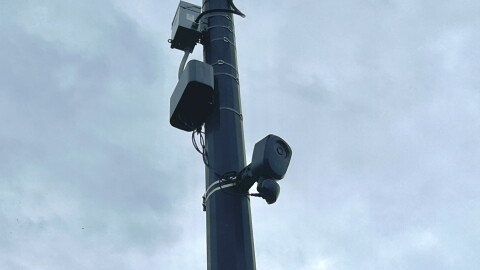 Emma Krab/KAXEAll county cameras have been removed as of Thursday, Sept. 10, 2026. Cameras under city jurisdiction may remain.
 -
 Lorie Shaull/KAXEThe Minnesota Pollution Control Agency is surveying people's fish-eating habits to help limit contaminants in water bodies and make fish safer to eat.
 -
 Emma Krab/KAXEThe tax used to fund civic center improvements will end Dec. 31, 2026.
 -
 Contributed/Michelle BedfordGet to know the volunteers behind the mic on KAXE. This week we find out more from longtime On The River host and volunteer, Michelle Bedford.
 -
 Maria Hileman/KAXEKAXE's weekly list of concerts near you features Known Only Locally, The Brothers Burn Mountain, Tattletale and a Community Open House Jam.
 -
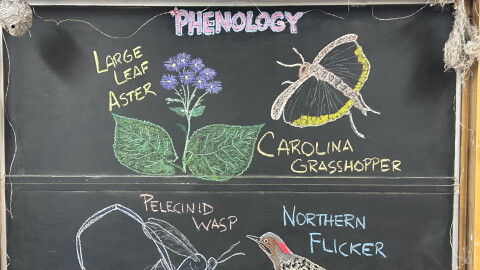 Contributed/Chad KaddatzDuring the week of Sept. 15, 2026, we enjoy reports of changing leaves and migrating birds and insects. Staff phenologist John Latimer responds.
 -
 Contributed/Grand Rapids PlayersGrand Rapids Players present the original play “Frankenfeldt” Sept. 25-27 and Oct. 2-4 at the Ives Studio Theater in the Reif Center. The director and two actors guest on “Area Voices.”
 -
 Contributed/Wild HorsesAttendees get an exclusive first listen to the latest album from Wild Horses, "The In Between," and hear a band interview by Music Director Kari Hedlund in Grand Rapids, MN.


