


VIRGINIA, MINN. — A student who allegedly threatened to bring a gun to Rock Ridge High School in Virginia and shoot his classmates faces three felonies and was placed under an extreme risk protection order under the state’s new red flag law.
The Virginia Police Department arrested Elijah K. L. Kehn, 19, of Eveleth on April 3, the same day students at Kehn’s lunch table reported the threats to school administration. At the request of the St. Louis County Attorney’s Office, which described Kehn as a “serious risk to public safety,” the judge set bail at $750,000 with no option for conditional release.
Kehn remains in the St. Louis County Jail and an emergency extreme risk protection order sought by the county attorney’s office was extended at a Tuesday, April 15, hearing. The orders bar Kehn from possessing a gun and require him to surrender any in his possession.
The order expires one year from Tuesday and remains in effect for at least six months unless changed by a later court order. Judge Andrew Peterson ruled there was probable cause to find the 19-year-old posed a significant danger of bodily harm to others. The order stated evidence shows Kehn does not possess any firearms.
“While the Defendant has no formal criminal history ... the State finds it is very disturbing that multiple witnesses reported to law enforcement that Defendant talks about killing himself, tells other people to ‘kill yourself’ and has made numerous threats in the past,” according to a memo from Assistant St. Louis County Attorney Amber Pederson. “Multiple witnesses stated they are scared, and they believe that Defendant will eventually act upon the threats he makes.”

Police responded April 3 to Rock Ridge High School when the assistant principal called about the lunchroom incident, which was reported by students whom Kehn allegedly threatened directly in his statements. The principal told police Kehn had a history of volatile behavior, including once breaking an iPad in half over his head.
The students said Kehn was upset he didn’t get what he wanted for lunch and was complaining about the school. When students challenged Kehn about his complaints, Kehn became angry. He allegedly said because he was over 18, he could buy a gun and gave specifics about the type and cost. He then told those at the lunch table he would shoot them first when he brought the gun to school.
According to the police report, Kehn was told he was suspended for 10 days, after which he left the school on foot, presumably to go home. Police learned the district would be moving to expel Kehn.
The officers then went to Kehn’s home and arrested him. In a later interview, he initially denied talking about the school, the criminal complaint stated. Kehn said he could not remember the exact words said because he was “too angry,” but allegedly admitted saying he would shoot people at his lunch table.
Another student told police they didn’t hear the threats but later received a message from Kehn threatening to “jump” one of the students who reported him.
The day after the incident, one of the students who reported Kehn asked police about a restraining order. The student reported Kehn previously told them to kill themselves and showed up at their house more than a month earlier for unknown reasons and paced in front of it.
Some Rock Ridge parents expressed frustration last week on social media that they did not learn about the incident from the school district, instead hearing the details from their children or through others’ social posts. KAXE sought comment from district officials regarding policies about parental notification and other procedures in the event of a school threat. Multiple phone calls were not returned.


Rock Ridge Superintendent Noel Schmidt responded in an email Tuesday afternoon with a copy of an undated statement shared with parents and staff.
“On Wednesday April 3rd, administration received a report that a high school student had made comments and threats to a group of students. The situation was investigated and referred to law enforcement,” the statement said.
“The student who made the comments was immediately removed from the building. At no point was there a disruption or a danger to any students in the building. Nor does there continue to be any danger to students in the building. We continue to make the safety of our students a priority and wanted to give you an accurate report of what actually happened.”
Kehn’s second court appearance in the criminal case was Monday. He faces three felonies for threats of violence with a reckless disregard of risk. Each felony carries a maximum five-year prison sentence, a $10,000 fine, or both.
According to Kehn’s interim conditions, he must undergo a diagnostic assessment and have no contact with victims. Kehn’s public defender requested his client undergo a Rule 20 evaluation, which is completed to determine a defendant’s competency to proceed.
The extreme risk protection order sought by the St. Louis County Attorney’s Office in this case is an early example of utilizing the state’s new red flag law, which went into effect Jan. 1.
Law enforcement, city and county attorneys and family or household members can petition a judge for these protection orders as a preventative measure when someone appears to be a threat to others or themselves. The orders immediately bar someone from possessing firearms and require law enforcement officers to retrieve those weapons. Long-term orders can last between six months and a year.
The Minnesota Judicial Branch said 38 extreme risk protection orders have been filed since the law went into effect. Thirty-five have been granted in some way, and in 23 cases, an emergency and long-term order were granted.
Virginia Police Chief Nicole Mattson said her department has not yet executed one of these orders, but they give police another avenue when it comes to firearms.
“The extreme risk protection orders are a wonderful option when we have a person that’s going to harm themselves or a risk to harming others,” she said.
-
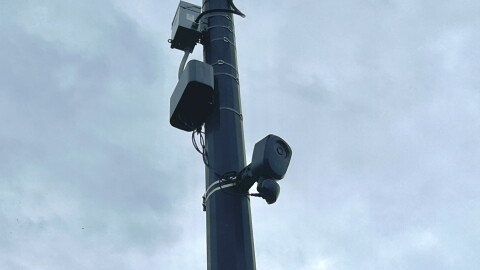 Emma Krab/KAXEAll county cameras have been removed as of Thursday, Sept. 10, 2026. Cameras under city jurisdiction may remain.
 -
 Lorie Shaull/KAXEThe Minnesota Pollution Control Agency is surveying people's fish-eating habits to help limit contaminants in water bodies and make fish safer to eat.
 -
 Emma Krab/KAXEThe tax used to fund civic center improvements will end Dec. 31, 2026.
 -
 Plus: Zebra mussels found at two lakes on the Leech Lake Band of Ojibwe Reservation; Pollution Control Agency seeks participants for fish consumption survey.
 -
 Leech Lake Band of Ojibwe staff also found starry stonewort in Six Mile Lake, near the city of Cass Lake.
 -
 Larissa Donovan/KAXEThe Bemidji Planning Board voted 6-1 to prohibit new developments of data centers greater than 10,000 square feet during its meeting Sept. 14, 2026.
 -
Plus: DNR cancels mineral lease for Twin Metals; and ICE's immigration crackdown last winter may have ripple effects for farm labor during harvest season.
-
 Contributed/Twin Metals Minnesota via MinnPostThe action comes weeks after executive action by Gov. Tim Walz halted the mining company's efforts to establish a copper-nickel mine in the Rainy River Headwaters Watershed.
 -
 Larissa Donovan/KAXEThe Bureau of Indian Affairs announced it was assuming operations of family and children services in Red Lake following a raid on Sept. 10, 2026.
 -
 Contributed/Adobe Stock via Minnesota News ConnectionAn estimated 15,000–20,000 seasonal agricultural workers arrive for work in Minnesota during the peak harvesting season, according to the National institutes of Health.


